



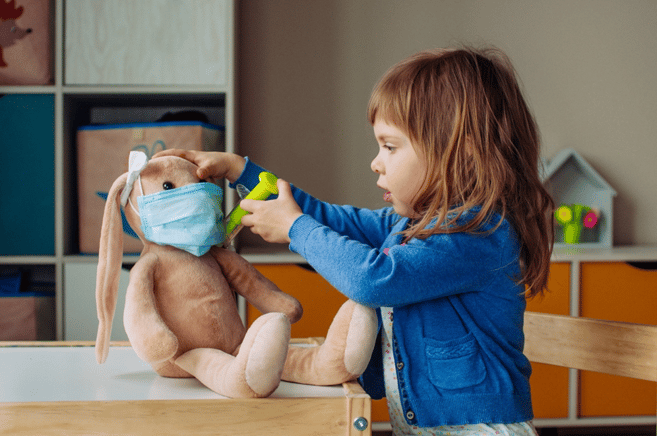
Many adults experience at least some level of anxiety when preparing for a needle procedure — but for young patients, it can be especially traumatic. Often, children’s apprehension originates from a fear of bodily harm, their lack of control over the situation, and their lack of experience undergoing venipuncture.
Pediatric needle phobia and anxiety manifests as symptoms similar to a panic attack. A child may exhibit shortness of breath, trembling, increased heart rate, nausea, and even become hysterical. This turns what should be a routine procedure into a distressing experience. And if you and your team don’t take action to mitigate this fear, your patient could develop a life-long phobia.
Luckily, by developing a poke plan, you can reduce patients’ fears and help them become more accustomed to needle-based procedures.
Here’s what you need to know to get started:
What is a Poke Plan? Ensuring Child Comfort in Hospitals
A poke plan is a step-by-step strategy for increasing patient comfort and reducing a child’s fear and anxiety when you and your staff administer vaccinations and perform other needle procedures.
Usually, healthcare organizations prepare a basic plan and then customize the experience for each patient based on their unique wants and needs. In most cases, parents and care providers (including the patient’s doctor, nurse, and/or child life specialist) collaborate on the plan, and, if age-appropriate, they also consult the patient.
If the child is too young to understand the procedure, a parent or primary caregiver can supply these details. Then, as the child ages, they can become more involved in their poke plan — which grants them a sense of control.
How to Create a Poke Plan
It’s useful to create a questionnaire for parents/caregivers and children, which you can use to prepare a personalized strategy — and keep in the patients’ chart for future procedures.
Your poke plan should include a few specific elements:
Assessing Previous Experience with Needle Sticks
By the time a baby is a year old, they have typically received as many as a dozen or more vaccines. A poke plan should start with a discussion about the child's history with vaccines or IVs. Did babies react by crying? Did toddlers and younger children express fear or discomfort? Generally, past experiences are a good indicator of future behaviors.
Identifying Key Participants for Plan Development
Having a familiar person in the room can help reduce stress, as children or adolescents may want their parents, siblings, or other trusted staff members present. For example, some patients will feel more comfortable if a nurse or other healthcare professional they know is with them, even if it's not the one administering the procedure.
Consider a Comfort Hold
There are certain comfort positions that work well for patients depending on the age group. Does the patient want to lie down, or do they prefer sitting upright? Do they want someone to hold them, or hold their hand? Would they prefer to watch the procedure, or pay attention to something else?
For a young child, there are several comfort hold techniques that can be helpful, including:
- Having the child sit on your lap facing away from you, with their back against your chest
- Having the child sit on your lap facing you, with their chest against your chest
- Having the child sit on your lap, facing sideways
These comfort positions can help to ease anxiety before a vaccine or procedure.
Choosing the Patient's Preferred Distraction Method
Again, depending on age, consider what pediatric distraction methods might be most effective. Do they want to watch TV, play a game on a tablet, read a book, or play with a puzzle or favorite toy to take their focus off the procedure? In some cases, parents or caregivers may have additional distraction measures prepared.
Implementing Additional Appropriate Comfort Measures
For infants, parents or caregivers may prefer to swaddle them, give them a pacifier, or use sucrose. For older children, deep breathing, imagery, or a favorite song may be better. Additionally, it’s a good idea to use comfort measures with a topical anesthetic skin refrigerant. Topical anesthetics temporarily reduce pain, increasing a child's comfort.
Unlike lidocaine or EMLA cream, which can require a significant waiting period after they're applied to the skin, Gebauer's Pain Ease® instant topical anesthetic begins to work in just 4-10 seconds. It's easy to apply, nonflammable, and FDA-cleared for use by a licensed healthcare practitioner to control the pain associated with needle procedures.
Have More Successful Procedures With Less Pain
No matter what pediatric comfort measures your poke plan entails, it’s crucial your patients are as involved as appropriately possible depending on their age. By taking the time to explain the procedure and techniques like these to ease their fears, you can help them become more comfortable with needle procedures.
For more resources on reducing needle anxiety and improving pediatric patient comfort, download our free guide.

