



Family practices and pediatricians are taking on more in-house dermatologic procedures like wart removal. However, storing large tanks of liquid nitrogen for this purpose isn’t always practical.
This has led to the emergence of systems like the Cryo Professional portable cryosurgical system from Gebauer Company.
Safety and effectiveness of cryosurgery are top priorities, especially when working with younger patients. Pediatricians and practice leaders evaluating these systems need clarity around cryosurgery benefits and risks.
This overview explores what constitutes a safe and effective cryosurgery system and how modern tools compare.
Why Safety Matters in Pediatric Cryosurgery Systems
The first question every pediatric clinician will ask is, how safe is cryosurgery? Here are a few of the most important factors.
Common Safety Considerations in Pediatric Procedures
Children present unique challenges. They have thinner skin, lower pain tolerance, and increased anxiety in clinical environments. These and other pediatric patient variables require medical cryosurgery systems to be:
- Predictable in application and intensity
- Quiet and non-intimidating in operation
- Designed for ease of use and quick procedures
With cryosurgical equipment comparisons, older systems using liquid nitrogen can be effective but carry notable drawbacks, such as:
- Storage requirements
- Difficult in movement and storage
- Risk of over-penetration
- Steep learning curves for physicians
Over-the-counter treatments often underperform or lack precision. A well-designed professional cryosurgery system bridges this gap, offering control without complexity.
Understanding Cryosurgery System Effectiveness in Practice
Medical professionals must view the term “effectiveness” in different ways and assess it from multiple perspectives. The cryosurgery effectiveness rate for benign lesion removal in pediatrics will touch on:
- Risks of cryosurgery
- Lesion clearance rates
- Ease of operator use
- Recurrence
- Patient tolerance
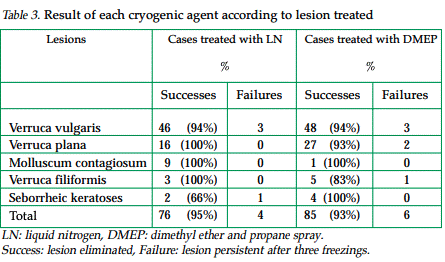
Studies over the last few years have compared liquid nitrogen systems and dimethyl ether and propane (DMEP) systems and show a similar efficacy.
This chart, from a study on dermatological cryosurgery in primary care with dimethyl ether propane spray in comparison with liquid nitrogen, shows the percentage of successful lesion removals with each agent.
See the published research here.
What Defines “Effectiveness” in Cryosurgery Systems?
Cryosurgery benefits and risks also refer to effectiveness when asking:
- Can providers apply it consistently across patient types?
- Does it deliver a controlled, repeatable result?
- Is the lesion fully treated with minimal recurrence?
Clinical confidence and procedural reliability are key.
Clinicians want a system that works across a range of lesion types and skin sensitivities without complexity.
Effective healthcare doesn’t compromise between achieving the best health outcomes and ensuring a positive experience for patients and providers. Effectiveness in cryosurgery comes down to the features a practice should look for in the ideal system.
Key Features to Look for in a Pediatric-Friendly Cryosurgery System
Nurses and clinicians in a pediatric practice cannot ensure the best cryosurgery patient outcomes if tools are not effective, safe, portable, compliant, and easy to use. These cryosurgery system features have a significant impact on the cryosurgery effectiveness rate in a busy practice.
Usability, Ergonomics, and Workflow Efficiency
Pediatrics is a time-sensitive specialty where patients, parents, and practitioners must accommodate flow, anxiety, and treatment in busy practices. The best cryosurgery system accommodates these aspects of efficiency by delivering:
- Minimal training requirements for nurses and physicians
- Ergonomic design that supports quick, precise application to small lesion sites
- Light and portable systems that don’t require electrical hookups
- Quiet, non-intimidating operation that doesn’t scare kids
- Fast turnaround so treatment can happen during routine visits
Patient safety in cryosurgery and cryosurgery patient outcomes is always the top priority. So is the system’s effect on practice workflow. Ideally, a clinician should be able to evaluate, prepare, and treat a lesion in under five minutes during a routine visit.
These aspects all have a direct impact on safety and compliance considerations.
Safety Certifications and Compliance Considerations
Professional-grade cryosurgery systems that use DMEP avoid the most common compliance hurdles. They don’t require refrigeration, a large amount of storage space, refilling requirements, and pose fewer risks during handling.
Practices should look for cryosurgery system features that include:
- Integrated spray control for adjustable flow
- Medical-grade applicators with consistent droplet delivery
- Surface temperature thresholds that avoid unnecessary dermal trauma
The ideal system should also support infection control protocols. These are requirements in pediatric environments where safety and speed are equally critical. Look for systems that meet or exceed established clinical and safety guidelines for medical devices. This includes cryosurgery device safety standards and documentation covering:
- Cooling mechanism/refrigerant (e.g., dimethyl ether, propane)
- Adjustable spray controls
- Safe handling and cleaning between patients
Safety documentation must be transparent to ensure providers can easily maintain internal and external compliance standards and best practices for system use.
Clinical Best Practices for Using Cryosurgery Systems in Pediatrics
Pre- to post-procedural protocols for cryosurgery safety and effectiveness must follow best practices to ensure safety, compliance, and best outcomes for each individual patient.
Pre-Procedure Safety Protocols
Pre-procedure protocols begin with equipment checks to ensure the system has the proper spray pressure tip condition and refrigerant levels. The type of process and system determine this, and the procedure documentation should specify it. Any cryosurgery system that makes this step overly complex adds unnecessary risk.
Pre-procedure examination starts with lesion classification to ensure a lack of pigmentation or irregular borders.
Confirming patient histories and sensitivities accompanies this process. If there is no clinical doubt of the benign nature of the lesion via classification, the procedure can continue by walking the caregiver and child through the procedure using age-appropriate explanations.
Post-Procedure Monitoring and Follow-Up
Cryotherapy in dermatology can produce mild erythema or edema, which clinicians should document even if they represent minimal reactions. Provide families with realistic timelines and aftercare instructions, including signs that warrant follow-up.
Systems that limit pain or discomfort while simplifying recovery offer a distinct advantage.
How Gebauer Supports Pediatric Providers with Cryosurgery Solutions
The shift from traditional liquid nitrogen tanks to portable DMEP-based systems is about convenience and efficiency. Since fear and pain can affect clinical outcomes in pediatric settings, treatments should be fast and reduce anxiety.
A cryosurgery tool that minimizes preparation, operates silently, and delivers consistent results improves patient experiences and makes clinical workflows more scalable. This means pediatric teams can treat more patients, with fewer delays and greater confidence.
Focus on Safety-First Engineering and Design
Gebauer’s Cryo Professional system is designed for safety, portability, and ease of use. It doesn’t require electricity and includes hospital-grade applicator tips that help control spray diameter and flow.
This helps practices reduce the risk of overtreatment or unnecessary exposure, which is important to child patients, caregivers, and clinicians.
To learn more about how to use this system to benefit your patients and your practice, download our free guide.
Frequently Asked Questions: Cryosurgery System Safety and Effectiveness
Is cryosurgery safe for pediatric patients?
Yes, Cryo Professional, when used with proper precautions and tools, makes cryosurgery a safe, non-invasive treatment option for common skin conditions. Consult a pediatrician before use on patients 4 years old and younger.
How long do cryosurgery procedures typically take?
The right system allows treatments to be applied in under a minute. The entire process, including prep and aftercare instruction, fits within a standard visit.
What precautions should a practice take before a pediatric cryosurgery procedure?
Assess lesion type and location, explain the process in child-friendly terms, confirm caregiver consent, and use protective barriers if needed.
What makes a cryosurgery system effective in pediatric care?
Ease of use, safety profile, precision, and consistent results across patient types. Portability and fast application also matter in pediatric workflows.
What role do nurses play in cryosurgery safety and effectiveness?
Nurses often handle setup, application, and caregiver education. Their confidence with the system plays a big role in clinic-wide success.
What features should we look for in evaluating a cryosurgery system?
Look for safety controls, spray precision, ease of cleaning, low noise levels, and support resources for training.
How can providers ensure proper system use during procedures?
Follow established clinical protocols, use training resources, and maintain consistent staff education.
Where can I find more clinical guidance on cryosurgery systems?
Gebauer provides clinical and practical training materials online. Visit our Cryo Professional page for more information.
IMPORTANT RISK AND SAFETY INFORMATION:
Cryo Professional is FLAMMABLE. Keep away from open flame and other potential ignition sources including diathermy or other medical equipment. Use in a well-ventilated area. Consult a pediatrician before use on patients 4 years old and younger. Do not use if uncertain of diagnosis or if there is a possibility of cancer, or on patients with cryoglobulinemia, circulatory issues, or using immunosuppressant medication. Do not spray cryogen directly on skin or when applicator tip is in contact with skin. Avoid eye contact. Use only as a system with the supplied applicators. Freezing may alter skin pigmentation. Avoid freezing of peripheral arteries. Carefully read instructions for use prior to using this product. CAUTION: Federal law restricts this device to sale by and on the order of a licensed healthcare practitioner.

